
A tub–shower combination is one of the highest fall-risk areas in any bathroom.


Stepping over the tub wall, shifting weight on wet surfaces, and turning while standing all increase instability. Proper grab bar placement significantly reduces this risk — but only when the bars are positioned strategically and installed correctly.
Below is a complete, copy-paste ready guide with embedded product links placed directly in the headings for clean WordPress formatting.
1. Moen 36-Inch Stainless Steel Grab Bar
– Best for Back Wall Horizontal Support
The back wall is the primary stabilization zone inside a tub shower combo. A horizontal grab bar installed here provides balance while standing and moving.
Recommended placement:
- Mount horizontally on the back wall.
- Install 33–36 inches from the finished floor.
- Use a 24–36 inch bar length.
Why this works:
- Supports lateral stability (most common slip direction).
- Assists while washing or turning.
- Distributes body weight across a wider grip range.
This 36-inch length provides strong multi-hand positioning support for most standard tubs.
2. Amazon Basics 24-Inch Bathroom Grab Bar
– Best for Vertical Entry Support
Stepping into and out of the tub is biomechanically the most unstable movement. A vertical grab bar near the entrance improves leverage and control.
Recommended placement:
- Mount vertically on the control (faucet) wall.
- Position near the front edge of the tub opening.
- Bottom should begin around 34–36 inches from the floor and extend upward 18–24 inches.
Why this works:
- Helps lift the leg over the tub wall.
- Provides natural pulling support.
- Reduces forward fall risk during exit.
A 24-inch bar is ideal for vertical orientation without overwhelming wall space.
3. Franklin Brass 32-Inch Concealed Mount Grab Bar
– Best for Extended Stability Coverage
For users who need a wider support zone, a longer horizontal bar improves accessibility.
Recommended placement:
- Install horizontally on the back wall.
- Maintain 33–36 inch height from finished floor.
Why this works:
- Allows repositioning grip while standing.
- Ideal for larger tub interiors.
- Supports multi-directional balance shifts.
The concealed mount design also provides a clean, professional look.
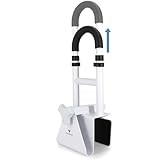
4. Vaunn Medical Bathtub Safety Rail
– Best Non-Permanent Entry Solution
If drilling into tile or studs is not possible, a clamp-on tub rail provides transitional support.
Recommended placement:
- Clamp securely onto the tub wall at the entry point.
- Ensure full tightening before use.
Why this works:
- No drilling required.
- Adjustable height.
- Ideal for renters or temporary recovery situations.
ADA-Informed Placement Guidelines
For optimal safety and ergonomic alignment:
- Mounting height: 33–36 inches from finished floor
- Grip diameter: 1.25–1.5 inches
- Wall clearance: Minimum 1.5 inches
- Weight capacity: At least 250 lbs (higher preferred)
Following these standards ensures reliable load-bearing performance.
Frequently Asked Questions (FAQs)
Where should a grab bar be placed in a tub shower combo?
The safest configuration includes:
- A horizontal grab bar on the back wall for standing stability.
- A vertical grab bar near the tub entrance for stepping in and out.
This combination covers the highest fall-risk movements.
What is the correct height for grab bars in a bathtub?
The recommended height is 33–36 inches from the finished floor. This range aligns with ergonomic reach and weight transfer mechanics for most adults.
Should grab bars be vertical or horizontal?
Both serve different functions:
- Horizontal bars provide side-to-side stability.
- Vertical bars assist with entry and exit.
For maximum safety, using both is recommended.
Can suction grab bars be used for full body support?
No. Suction grab bars are not designed for full weight bearing. They may be used as temporary balance aids but should never replace stud-mounted grab bars for safety.
Do grab bars need to be installed into studs?
Yes. For safe load-bearing support, grab bars must be anchored into wall studs or reinforced backing. Drywall anchors alone are insufficient for body-weight support.
| Product | Length | Installation Type | Best Placement | Weight Capacity | Best For |
|---|---|---|---|---|---|
| Moen 36-Inch Stainless Steel Grab Bar | 36 inches | Wall-mounted (stud required) | Back wall (horizontal) | 500 lbs | Full standing stability |
| Amazon Basics 24-Inch Grab Bar | 24 inches | Wall-mounted (stud required) | Entry wall (vertical) | 500 lbs | Entry and exit support |
| Franklin Brass 32-Inch Grab Bar | 32 inches | Wall-mounted (stud required) | Back wall (horizontal) | 500 lbs | Extended grip coverage |
| Vaunn Medical Bathtub Safety Rail | Adjustable | Clamp-on (no drilling) | Tub edge (entry point) | 300 lbs | Non-permanent installation |
Conclusion
Correct grab bar placement transforms a standard tub shower combo into a significantly safer bathing environment. The key is not just installing a grab bar — it’s positioning it where the body naturally needs support during movement transitions.
For most homes, the ideal setup includes:
- One horizontal bar on the back wall
- One vertical bar near the entry
- Optional clamp-style rail for additional support
When properly installed into wall studs and positioned at ergonomic heights, grab bars dramatically reduce fall risk and increase independent bathing confidence.