
Metalworking demands precision, power, torque, and durability — far more than typical woodworking tasks.
When drilling steel, aluminum, cast iron, or thick metal sheets, a generic drill press simply won’t deliver consistent, clean holes. You need a tool engineered specifically for metalworking performance.


In this guide, we’ll walk through:
- The most capable drill presses for metalworking on Amazon.com (US audience)
- A detailed comparison table with direct Amazon links
- A technical buying guide focused on metalworking performance
- FAQ answers based on real buyer intent
Whether you’re a hobby machinist, home fab shop owner, or light-industrial user, this article will help you choose the right metalworking drill press for your needs.
Why Choosing the Right Drill Press for Metalworking Matters
Drilling metal introduces challenges that wood drilling does not:
- Heat buildup — Metal cutting generates high friction and surface heat
- Torque under load — Bits slow down without enough power
- Proper speed (RPM) — Lower RPM for metal; higher for wood
- Spindle rigidity — Flex means inaccurate holes
- Vibration control — Excess vibration ruins bit and workpiece
A drill press optimized for metalworking must provide:
- Stable RPM range suitable for steel and aluminum
- High torque even at low speeds
- Heavy-duty cast iron construction
- Strong spindle and bearing system
- Quality depth stops for repeat drilling
Now let’s look at the models that excel in metalworking.
Top 4 Best Drill Presses for Metalworking (2026)
1. JET JDP-17 17-Inch Drill Press
Key Specifications
- Motor: 3/4 HP induction motor
- Speed Range: 210–3500 RPM (16 speeds)
- Chuck Size: 5/8 inch
- Spindle Travel: 5 inches
- Cast Iron Table & Head
- Adjustable Depth Stop
Why It’s Ideal for Metal
The JET JDP-17 is widely regarded among professionals for metal drilling. Its induction motor delivers reliable torque at very low RPM values, crucial when drilling steel and harder alloys.
The 16-speed range lets you tailor drilling speed precisely — a key factor when transitioning from aluminum to hardened steel. The heavy-duty cast iron table resists vibration and the spindle assembly exhibits minimal runout.
Best For
- Steel fabrication
- Metal workshop use
- Precision metal drilling
2. Grizzly G7944Z 17-Inch Drill Press
Key Specifications
- Motor: 3/4 HP
- Speed Range: 195–3450 RPM (12 speeds)
- Chuck Size: 5/8 inch
- Spindle Travel: 5 inches
- Belt Tension Indicator
- Cast Iron Construction
Why It’s Great for Metal
Grizzly’s G7944Z pairs a robust motor with a wide speed range optimized for metals. Lower RPM capability ~195 RPM is perfect for hardened steel and thick plate drilling.
The belt tension indicator helps maintain consistent belt performance — important for long-term precision.
Best For
- Heavy gauge metalwork
- Fabrication shops
- Industrial hobbyists
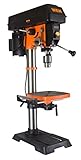
3. WEN 4214T 12-Inch Variable Speed Drill Press
Key Specifications
- Motor: 5 Amp
- Speed Range: 580–3200 RPM (variable)
- Chuck Size: 1/2 inch
- Spindle Travel: 3-1/8 inches
- Digital Speed Display
- Cast Iron Table & Base
Why It’s Good for Metal
While marketed as a general-purpose drill press, variable speed control makes it surprisingly capable for metalworking — especially aluminum, brass, and thinner steel.
The digital RPM readout allows accurate speed setting for specific metals, reducing bit wear and heat buildup.
Best For
- Light to medium metal drilling
- Aluminum fabrication
- DIY metal projects
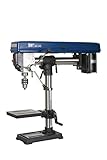
4. RIKON 30-120 10-Inch Bench-Top Drill Press
Key Specifications
- Motor: 5 Amp
- Speed Range: 570–3050 RPM (variable)
- Chuck Size: 1/2 inch
- Spindle Travel: 2-5/8 inches
- Cast Iron Table
Why It’s Metal-Capable
RIKON’s bench model is engineered with a solid quill and table assembly, providing better stability than many entry-benchtop presses.
Its variable speed dial enables precise RPM adjustment — key when drilling stainless or mild steel.
Best For
- Hobby metalwork
- Small home shops
- Precision aluminum work
Buying Guide: How to Choose the Best Drill Press for Metalworking
Metalworking demands different priorities than woodworking drill presses. Here’s what really matters:
Motor Torque under Load
Metalwork drilling requires power at low RPM. A universal motor with high amperage or an induction motor with 1/2 HP+ is ideal.
Low RPM Capability
Steel and cast iron drilling require slow RPM — often between 200–800 RPM depending on bit size and metal type.
Spindle Rigidity & Runout Control
Any lateral spindle movement ruins hole quality. Look for tight tolerances and quality bearings.
Chuck Size
A 5/8-inch chuck supports larger drill bit shanks needed for deeper holes in metal.
Table Strength
Cast iron tables resist deflection under drilling load — essential for precision metal holes.
Speed Control
Variable speed eliminates the need for frequent belt changes and helps match optimal RPM for different metals.
⸻
FAQs (Metalworking Drill Press)
What RPM is best for drilling steel?
For steel, RPM values typically range from 250–800 RPM, depending on bit diameter.
Can benchtop drill presses handle metal?
Yes—especially models with stable frames, low RPM capability, and quality bearings.
Do I need cutting fluid?
Yes. Cutting fluid dramatically reduces heat and prolongs drill bit life.
Is horsepower more important than speed?
For metalwork, torque (and the ability to maintain RPM under load) is often more critical than peak speed.
What bits work best for metal?
High-speed steel (HSS) bits, cobalt bits, or carbide bits depending on material hardness.
⸻
Final Recommendation
• Best Overall for Metalworking: JET JDP-17
• Heavy Gauge Metal & Industrial: Grizzly G7944Z
• Best Value for Light/Medium Metal: WEN 4214T
• Compact Small Shop Metal Work: RIKON 30-120
If your work frequently involves drilling through steel, aluminum, cast iron, or other metals, choosing a purpose-built drill press with low RPM capability and strong spindle stability is critical to accuracy, bit life, and user safety.