
Milling your own lumber at home used to require heavy, expensive sawmill equipment.

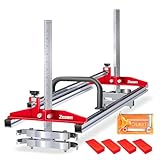


Today, a no drill chainsaw mill allows you to convert logs into usable planks right in your backyard, workshop, or property — without permanently modifying your chainsaw.
For woodworkers, homesteaders, and DIY builders, this means greater independence, lower lumber costs, and full control over slab thickness and board dimensions.
The key advantage of a no drill chainsaw mill is simplicity. These systems clamp directly onto your chainsaw bar without drilling holes into it. That preserves your chainsaw warranty, avoids structural weakening of the bar, and allows easy removal when you’re done milling. Whether you’re processing fallen trees, preparing live-edge slabs, or building outdoor furniture, the right mill attachment can dramatically expand your capabilities.
This Best No Drill Chainsaw Mill guide reviews five dependable clamp-on models designed for home use and woodworking. Each option balances durability, adjustability, and compatibility — so you can choose the right system before your next timber project.
1. Carmyra Portable Chainsaw Mill 36”
The Carmyra 36” is one of the most popular clamp-on milling systems for homeowners. It attaches securely without drilling and allows adjustable plank thickness for custom boards.
Key Features
• Fits chainsaw bars from 14” to 36”
• Adjustable cutting height
• Aluminum and steel construction
• Easy clamp-on mounting
• Suitable for large logs
Pros
• Wide bar compatibility
• Stable cutting performance
• Durable materials
• Good balance of price and performance
Cons
• Heavier than mini mills
• Requires a powerful chainsaw for best results
Best For
Homeowners and serious DIY woodworkers who want flexibility and consistent slab cutting.
⸻
2. Zozen Chainsaw Mill 36”
The Zozen mill is designed for ease of setup and stable milling without drilling into your bar. Reinforced brackets improve alignment during longer cuts.
Key Features
• Universal 14”–36” bar fit
• Adjustable slab thickness
• Anti-vibration frame structure
• Portable design
Pros
• Straightforward installation
• Solid structural support
• Good for medium-to-large logs
Cons
• Assembly requires attention to alignment
• Not ideal for very small chainsaws
Best For
DIY builders making live-edge tables or outdoor furniture.
⸻
3. Imony 36” Portable Chainsaw Mill
The Imony model is a lightweight option aimed at occasional milling projects. It still clamps securely without drilling and supports a broad range of bar sizes.
Key Features
• Adjustable height settings
• Aluminum frame
• Compatible with multiple chainsaw brands
• Compact storage profile
Pros
• Budget-friendly
• Lightweight
• Simple clamping system
Cons
• Not as rugged as premium mills
• May flex under extremely heavy loads
Best For
Home users processing occasional fallen trees.
⸻
4. Timber Tuff TMS-24
The Timber Tuff TMS-24 is a smaller-format mill designed for compact jobs. It clamps directly onto the guide bar and is easier to maneuver than full-length systems.
Key Features
• Designed for 24” bars
• Steel construction
• Compact footprint
• Simple clamp-on attachment
Pros
• Easier handling
• Durable steel frame
• Good for smaller logs
Cons
• Limited maximum width
• Not suited for wide slab projects
Best For
Woodworkers focusing on smaller boards and lighter milling tasks.
⸻
5. Granberg Alaskan Chainsaw Mill MKIV G777
Granberg is widely recognized in chainsaw milling. The MKIV G777 offers precision engineering with aircraft-grade aluminum and refined clamping systems.
Key Features
• Designed for 16”–20” bars
• Precision thickness adjustments
• Durable aluminum build
• Stable cutting alignment
Pros
• Excellent cut consistency
• Premium material quality
• Long-term durability
Cons
• Higher price point
• Smaller maximum width range
Best For
Woodworkers who prioritize precision and repeatability.
⸻
Buyer’s Guide: No Drill Chainsaw Mill Buying Guide
What to Look for Before Buying
Bar Compatibility
Ensure the mill matches your chainsaw bar length. Many support 14”–36”, but confirm exact limits.
Material Construction
Aluminum offers lighter weight and corrosion resistance. Steel adds rigidity but increases weight.
Adjustment Range
Look for clear height adjustment markings to control slab thickness precisely.
Chainsaw Power
Milling requires more torque than standard cutting. A high-displacement gas chainsaw performs best.
Ease of Assembly
Some systems require detailed alignment. Simpler clamping systems reduce setup time.
⸻
Common Mistakes to Avoid
• Using an underpowered chainsaw
• Ignoring bar compatibility
• Not securing logs properly
• Skipping protective gear
• Choosing the cheapest option without structural stability
⸻
Who Should Buy a No Drill Chainsaw Mill
• Homeowners processing fallen trees
• DIY woodworkers making live-edge slabs
• Homesteaders producing custom lumber
• Budget-conscious builders reducing lumber costs
If you want portable, flexible lumber milling without permanent chainsaw modifications, these systems are practical solutions.
⸻
Frequently Asked Questions
Are no drill chainsaw mills worth it?
Yes. They provide affordable lumber milling without modifying your chainsaw bar, making them ideal for DIY woodworking.
Can I use any chainsaw with a mill?
Most mills require a powerful gas chainsaw. Electric models usually lack sufficient torque.
What size chainsaw is best for milling?
A chainsaw with at least 50cc–70cc engine displacement is typically recommended for consistent milling performance.
Do no drill mills damage the chainsaw bar?
No. They clamp onto the bar without drilling holes, preserving structural integrity.
How thick can boards be cut?
Most mills allow adjustable thickness from approximately 0.5 inches to several inches depending on design.
Are chainsaw mills accurate?
Accuracy depends on setup, log stability, and operator technique. Premium models improve alignment.
Do I need a special chain?
A ripping chain is recommended for smoother cuts and reduced strain.
Is milling safe for beginners?
With proper protective equipment and careful setup, beginners can use them safely.
How long does milling take?
It depends on log size and chainsaw power. Larger logs require more time and fuel.
⸻
Conclusion
Choosing the Best No Drill Chainsaw Mill gives you the freedom to mill lumber without permanent chainsaw modifications. The Carmyra and Zozen models offer versatility for larger logs, while Imony delivers affordable performance for occasional use. Timber Tuff suits smaller projects, and Granberg stands out for precision and durability.
If you’re planning your next woodworking build or processing logs from your property, upgrading to a reliable no drill chainsaw mill now ensures cleaner cuts, better slab control, and long-term value.