
Milling your own lumber at home no longer requires industrial sawmill equipment. A lightweight chainsaw mill gives you portability, flexibility, and control without the bulk of traditional milling systems.



For homeowners, DIY woodworkers, homesteaders, and property owners, this means turning fallen trees into usable boards without heavy machinery.
But weight matters more than most buyers realize. A heavy mill increases fatigue, reduces cut consistency, and makes field transport difficult. Lightweight chainsaw mills are easier to align, faster to assemble, and far more practical for solo operators. The right model should balance low weight with structural rigidity — because flexibility under load can ruin your cuts.
This Best Lightweight Chainsaw Mill guide reviews five dependable, clamp-on systems designed for portability and home woodworking use. If you want cleaner cuts, easier handling, and less strain during long milling sessions, these are the models worth considering before your next project.
1. Granberg Alaskan MKIV G777
The Granberg G777 is one of the most recognized compact milling systems available. Its aircraft-grade aluminum construction keeps weight manageable while maintaining alignment stability.
Key Features
• Designed for 16”–20” chainsaw bars
• Precision-machined components
• Lightweight aluminum construction
• Adjustable cutting thickness
Pros
• Extremely accurate cuts
• Durable and corrosion-resistant
• Easy to transport
• Excellent long-term reliability
Cons
• Higher cost
• Limited maximum width
Best For
Woodworkers who prioritize clean, precise slab cutting with minimal setup weight.
⸻
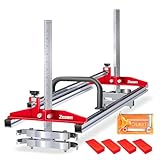
2. Zozen 36” Chainsaw Mill
Zozen offers a strong balance between size compatibility and lightweight handling. Despite supporting up to 36” bars, it remains manageable for solo operation.
Key Features
• Fits 14”–36” bars
• Reinforced structural brackets
• Adjustable slab thickness
• Portable frame design
Pros
• Broad compatibility
• Stable under moderate loads
• Reasonable weight-to-strength ratio
Cons
• Larger models require powerful chainsaw
• Assembly requires alignment care
Best For
DIY users needing flexibility without excessive weight.
⸻
3. Carmyra 36” Portable Chainsaw Mill
Carmyra’s mill is designed for homeowners milling medium-to-large logs. Aluminum construction reduces overall weight compared to heavy steel systems.
Key Features
• Adjustable cutting depth
• Wide bar compatibility
• Durable aluminum-steel hybrid build
• Clamp-on design (no drilling)
Pros
• Strong structural stability
• Good value for size
• Portable for field milling
Cons
• Heavier than compact mini mills
• Requires higher displacement chainsaw
Best For
Users handling occasional large slab projects.
⸻
4. Timber Tuff TMS-24
If portability is your top priority, the Timber Tuff TMS-24 mini mill is easier to maneuver than full-length milling systems.
Key Features
• Compact mini mill structure
• Compatible with bars up to 24”
• Steel construction
• Clamp-on mounting system
Pros
• Easier to control
• Durable frame
• Suitable for smaller logs
Cons
• Limited slab width
• Less ideal for wide boards
Best For
Woodworkers cutting smaller dimensional lumber.
⸻
5. VEVOR Portable Chainsaw Mill
The VEVOR mill is a cost-effective option that keeps weight manageable while supporting larger bar lengths.
Key Features
• Adjustable plank thickness
• Aluminum and steel construction
• 14”–36” bar compatibility
• Portable frame
Pros
• Budget-friendly
• Wide compatibility
• Easy to transport
Cons
• Not as refined as premium brands
• Long-term durability depends on usage
Best For
Budget-conscious DIYers entering chainsaw milling.
⸻
Lightweight Chainsaw Mill Buying Guide
What to Look for Before Buying
Material Construction
Aluminum reduces weight and resists corrosion. Steel increases strength but adds fatigue during long sessions.
Bar Compatibility
Match your chainsaw bar length to the mill’s supported range.
Adjustment Mechanism
Clear, precise thickness adjustment improves repeatability.
Chainsaw Power
Milling requires torque. A 50cc–70cc gas chainsaw is typically recommended.
Frame Rigidity
Lightweight does not mean flimsy. Ensure the frame resists flexing under load.
⸻
Common Mistakes to Avoid
• Choosing ultra-cheap thin frames that flex
• Using underpowered chainsaws
• Ignoring log stabilization
• Skipping ripping chains
• Overlooking assembly alignment
⸻
Who Should Buy a Lightweight Chainsaw Mill
• Solo woodworkers
• Homesteaders milling in remote areas
• DIY builders creating live-edge slabs
• Property owners processing fallen trees
If portability and ease of handling matter, lightweight mills dramatically improve workflow.
⸻
Frequently Asked Questions
Are lightweight chainsaw mills strong enough?
Yes, provided they use reinforced aluminum or hybrid construction. Structural design matters more than weight alone.
What chainsaw size works best?
A 50cc or larger gas chainsaw typically provides sufficient torque for consistent milling.
Do lightweight mills reduce fatigue?
Yes. Lower weight makes setup, adjustment, and transport easier for solo users.
Are they suitable for hardwood?
Yes, but hardwood requires sharper ripping chains and adequate chainsaw power.
Can beginners use chainsaw mills?
Yes, with proper safety gear and careful setup.
How thick can slabs be cut?
Most adjustable mills allow thickness from approximately 0.5 inches upward.
Do I need a ripping chain?
Yes. Ripping chains improve cut smoothness and reduce engine strain.
Is aluminum durable enough?
High-grade aluminum is corrosion-resistant and strong enough for repeated use.
⸻
Conclusion
The Best Lightweight Chainsaw Mill gives you mobility, efficiency, and control without excessive fatigue. The Granberg G777 excels in precision. Zozen and Carmyra offer versatility for larger bars. Timber Tuff supports compact jobs. VEVOR provides entry-level affordability.
Upgrading to a lightweight system now means easier handling, better consistency, and more efficient milling during your next woodworking project.