
Pipeline welding is one of the toughest jobs in the skilled trades, requiring workers to operate in demanding environments while facing constant exposure to sparks, slag, heat, and heavy equipment.



The right welding boots can significantly improve safety, comfort, and productivity throughout long workdays.
Quality pipeline welding boots are designed to protect your feet from impact hazards, hot metal, electrical risks, and rough terrain while providing all-day support.
Whether you’re working on pipelines, construction sites, fabrication projects, or industrial maintenance, investing in the right footwear is essential.
This guide covers the best welding boots for pipeline work and highlights the features that matter most for professional welders.
5 Best Welding Boots for Pipeline Work: Detailed Overview
1. SAFETOE Welding Boots for Men
The SAFETOE Welding Boots are designed specifically for workers who need reliable protection without sacrificing comfort.
Featuring a composite safety toe and heat-resistant construction, these boots offer excellent protection while remaining lighter than traditional steel-toe alternatives.
Their durable leather build makes them suitable for demanding pipeline and fabrication environments.
Key Features
* Composite safety toe protection
* Heat-resistant leather construction
* Slip-resistant outsole
* Puncture-resistant midsole
* Electrical hazard protection
Pros
Lighter than steel-toe boots
Comfortable for extended shifts
Good balance of protection and mobility
Cons
May require a short break-in period
Premium pricing compared to basic work boots
Why You Should Use It
These boots are ideal for pipeline welders who need strong protection with reduced weight for all-day comfort.
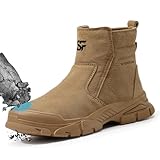
2. SFSDOUN Slip-On Welding Work Boots
The SFSDOUN Welding Work Boots provide a convenient slip-on design that eliminates exposed laces, reducing the risk of sparks causing damage.
Their rugged construction and protective steel toe make them well-suited for welding environments where quick footwear changes may be necessary.
Key Features
* Steel toe protection
* Slip-on design
* Heat-resistant leather upper
* Oil-resistant outsole
* Shock-absorbing sole construction
Pros
Easy to put on and remove
Reduced spark exposure compared to traditional laces
Durable worksite construction
Cons
Less adjustable fit than lace-up boots
May feel bulky for some users
Why You Should Use It
A practical option for welders who prefer the convenience and safety advantages of a slip-on design.
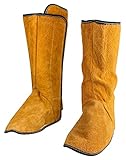
3. QWORK Fireproof Leather Shoe Leg Covers
Although not a standalone welding boot, the QWORK Fireproof Shoe Leg Covers provide an additional layer of protection against sparks, slag, and molten metal.
Many experienced pipeline welders use accessories like these to extend the life of their boots and improve safety.
Key Features
* Split cowhide leather construction
* Fire-resistant design
* Adjustable fastening straps
* Covers boots and lower legs
* Durable stitching for industrial use
Pros
Excellent spark protection
Affordable safety upgrade
Extends boot lifespan
Cons
Not a replacement for proper welding boots
Adds additional gear to wear
Why You Should Use It
These covers are an excellent addition for welders seeking extra protection during heavy welding operations.
4. GUBANGDUN Steel Toe Work Boots
The GUBANGDUN Steel Toe Work Boots combine traditional work boot durability with the protective features needed for industrial environments.
Their sturdy construction and reinforced safety toe make them a dependable option for pipeline projects and demanding job sites.
Key Features
* Steel toe protection
* Genuine leather upper
* Slip-resistant outsole
* Shock-absorbing midsole
* Heavy-duty worksite design
Pros
Strong impact protection
Durable construction
Good value for the features offered
Cons
Heavier than composite-toe models
May require break-in time
Why You Should Use It
A solid choice for welders needing dependable protection and durability at a reasonable price.
5. QeeLink Leather Welding Spats
QeeLink Leather Welding Spats are designed to cover the upper portion of work boots and prevent sparks, slag, and molten metal from entering footwear.
They are commonly used by professional welders as an extra safety measure in demanding environments.
Key Features
* Durable cowhide leather
* Heat-resistant construction
* Adjustable strap system
* Protects laces and boot openings
* Lightweight and portable
Pros
Improves welding safety
Protects expensive work boots
Easy to install and remove
Cons
Not a standalone boot
Requires compatible footwear
Why You Should Use It
Ideal for pipeline welders looking to maximize protection against sparks and molten debris.
Tips for Choosing the Best Welding Boots for Pipeline Work
Look for heat-resistant leather capable of handling repeated exposure to sparks and hot metal.
Choose boots with safety toe protection that meets workplace requirements.
Avoid exposed nylon materials that can melt when exposed to welding sparks.
Slip-resistant outsoles are important for maintaining stability on uneven terrain and muddy pipeline sites.
Consider electrical hazard protection if you work around energized equipment.
Lace protectors, metatarsal guards, and welding spats can significantly improve safety.
Comfort matters because pipeline welders often spend long hours standing, walking, kneeling, and climbing.
Prioritize durability since welding environments can quickly wear out lower-quality footwear.
Buying Guide
When selecting welding boots for pipeline work, safety should always be your top priority. Look for footwear that provides protection against impact, compression, sparks, heat, and punctures.
Full-grain leather remains one of the best materials because it offers excellent durability and heat resistance compared to many synthetic alternatives.
Pipeline welders often work in remote locations, muddy conditions, and uneven terrain, making traction and waterproofing important considerations.
Safety toe protection can be either steel or composite. Steel toes generally provide maximum impact protection, while composite toes offer lighter weight and better insulation from temperature extremes.
Comfort is equally important because welders frequently spend ten to twelve hours on their feet. Proper cushioning, arch support, and shock absorption can help reduce fatigue throughout the workday.
Finally, consider additional protective accessories such as welding spats or leather boot covers to further protect your feet and extend the life of your footwear.
Comparison Table
| Product | Safety Toe | Heat Resistance | Material | Closure | Best Feature | Best For | Buy Now |
|---|---|---|---|---|---|---|---|
| SAFETOE Welding Boots | Composite Toe | High | Full-Grain Leather | Lace-Up | Lightweight Protection | Pipeline Welders | Buy Now |
| SFSDOUN Welding Boots | Steel Toe | High | Leather | Slip-On | Quick Access Design | Daily Welding Jobs | Buy Now |
| QWORK Fireproof Covers | N/A | Very High | Split Leather | Adjustable Straps | Spark Protection | Extra Safety Layer | Buy Now |
| GUBANGDUN Work Boots | Steel Toe | High | Genuine Leather | Lace-Up | Heavy-Duty Design | Industrial Work | Buy Now |
| QeeLink Welding Spats | N/A | Very High | Cowhide Leather | Hook & Strap | Lace Protection | Boot Protection | Buy Now |
What Are Welding Boots for Pipeline Work?
Welding boots are specialized work boots designed to protect workers from heat, sparks, molten metal, impact hazards, and harsh jobsite conditions.
Pipeline welders often face unique challenges including rough terrain, heavy equipment, and prolonged exposure to welding operations.
These boots typically feature heat-resistant leather, reinforced safety toes, and slip-resistant outsoles.
Many models also include electrical hazard protection and puncture-resistant midsoles.
The right welding boots can improve both safety and comfort throughout demanding work shifts.
How to Use, Maintain, and Store Welding Boots
Clean leather surfaces regularly to remove dirt, slag, and debris.
Inspect soles and stitching frequently for signs of wear or damage.
Apply leather conditioner periodically to prevent cracking and drying.
Replace worn insoles when cushioning begins to deteriorate.
Store boots in a cool, dry environment away from direct heat sources.
Use welding spats when performing heavy welding tasks to extend boot life.
Additional Welding Safety Tips
Always wear flame-resistant clothing while welding.
Keep boot laces covered whenever possible.
Replace damaged safety footwear immediately.
Use proper personal protective equipment at all times.
Inspect footwear before every shift.
Frequently Asked Questions
Are steel-toe boots required for pipeline welding?
Many job sites require safety toe protection, but specific requirements vary by employer and location.
What material is best for welding boots?
Full-grain leather is generally considered the best choice due to its durability and heat resistance.
Can welding sparks damage work boots?
Yes, repeated exposure to sparks and molten metal can damage ordinary footwear over time.
Are welding spats worth using?
Yes, they provide additional protection and help extend the life of your boots.
How often should welding boots be replaced?
Replacement depends on usage, but boots showing significant wear or compromised protection should be replaced immediately.
Conclusion
The best welding boots for pipeline work combine durability, comfort, and workplace safety.
The SAFETOE Welding Boots offer an excellent balance of protection and comfort, while the SFSDOUN boots provide convenient slip-on functionality.
The GUBANGDUN boots deliver dependable heavy-duty performance, and protective accessories like the QWORK covers and QeeLink spats add valuable safety enhancements.
Choosing the right footwear can improve comfort, reduce fatigue, and help protect against common welding hazards.
Investing in quality welding boots is one of the smartest decisions a pipeline welder can make.