
A battery operated brad nailer eliminates compressors, hoses, and setup delays.


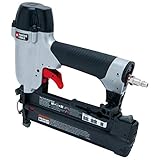
For trim work, cabinetry, molding, and light framing, cordless convenience dramatically improves workflow.
Modern lithium-ion systems now deliver power that rivals pneumatic models without sacrificing portability.
Whether you’re a contractor working daily or a serious DIYer upgrading your toolkit, choosing the right battery brad nailer affects speed, precision, and fatigue.
The models below balance professional performance with homeowner value, ensuring you invest in a tool that delivers consistent results.
If you’re upgrading this year, these are the battery brad nailers worth serious consideration.
5 Best Battery Brad Nailers You Should Buy – Detail Review
1. 12345 DEWALT DCN680B 20V MAX XR Brad Nailer
Overview: The DEWALT DCN680B is widely regarded as one of the most reliable battery operated 18-gauge brad nailers. Featuring a brushless motor and consistent depth control, it delivers professional-grade performance.
- 20V MAX lithium-ion platform
- Brushless motor
- Tool-free jam release
- Micro nose for accuracy
- Sequential & bump firing modes
Pros:
- Excellent power consistency
- Minimal maintenance required
- Compact and balanced
Cons:
- Battery sold separately
- Higher price than entry-level models
Best For: Contractors and serious DIYers.
2. 23456 Milwaukee 2746-20 M18 Brad Nailer
Overview: Milwaukee’s M18 brad nailer offers impressive driving power and reliability. Designed for professional trim carpenters, it handles hardwood applications efficiently.
- M18 REDLITHIUM battery platform
- Brushless motor
- Dry-fire lockout
- Tool-free depth adjustment
- Compact profile
Pros:
- Strong hardwood performance
- Durable build quality
- Consistent firing response
Cons:
- Slightly heavier
- Premium pricing
Best For: Professional finish carpenters.
3. 34567 PORTER-CABLE PCC790LA Brad Nailer
Overview: The PORTER-CABLE PCC790LA provides dependable cordless performance at a more accessible price. It’s ideal for trim, paneling, and DIY renovation projects.
- 20V MAX battery system
- Multiple firing modes
- Tool-free jam release
- Lightweight design
- Integrated LED light
Pros:
- Good value
- Easy to operate
- Comfortable grip
Cons:
- Not as powerful as premium models
- Basic feature set
Best For: Home improvement projects.
4. 45678 Ryobi P322 ONE+ 18V Brad Nailer
Overview: Ryobi’s P322 offers solid performance within the ONE+ battery ecosystem. It’s popular among DIYers looking for cordless convenience at moderate cost.
- 18V ONE+ compatibility
- Tool-free depth adjustment
- Dry-fire lockout
- Grip-light activation
- Compact body
Pros:
- Affordable
- Easy battery integration
- User-friendly design
Cons:
- Heavier than some competitors
- Less refined depth control
Best For: DIYers already using Ryobi tools.
5. 56789 Metabo HPT 18V Brad Nailer
Overview: Metabo HPT delivers precise nailing performance with reliable battery efficiency. It’s a balanced option for users wanting durability without ultra-premium pricing.
- 18V lithium-ion system
- Compact nose design
- Tool-less jam release
- Depth adjustment dial
- Fast response trigger
Pros:
- Solid construction
- Good runtime
- Reliable consistency
Cons:
- Fewer advanced features
- Battery may be sold separately
Best For: Balanced pro and DIY use.
Battery Brad Nailer Buying Guide
What to Look For
- Brushless motor for efficiency
- Tool-free jam release
- Battery platform compatibility
- Weight and balance
- Sequential and bump firing modes
Common Mistakes
- Ignoring battery compatibility
- Choosing based on price alone
- Overlooking weight for overhead work
Who Should Buy One
Contractors, remodelers, cabinet installers, and serious DIYers who want compressor-free efficiency.
Frequently Asked Questions
Are battery operated brad nailers powerful enough?
Yes. Modern brushless models provide consistent driving power comparable to pneumatic systems for trim applications.
Do battery brad nailers require maintenance?
They require minimal maintenance compared to pneumatic tools since no oiling or compressor servicing is needed.
What gauge do these nailers use?
All listed models use standard 18-gauge brad nails.
Are battery brad nailers worth it?
For portability and convenience, they are absolutely worth it, especially for remodelers and on-site work.
How long does a battery last?
Runtime depends on battery capacity (Ah rating), but most can fire hundreds of nails per charge.
Can they handle hardwood?
Premium models like DEWALT and Milwaukee handle hardwood trim effectively.
Do they include batteries?
Many are sold as bare tools; verify before purchasing.
What’s the difference between 18V and 20V?
They are nominal ratings; performance differences depend more on motor design than voltage labeling.
Comparison Table
| Product | Voltage | Motor | Weight | Firing Modes | Best For |
|---|---|---|---|---|---|
| DEWALT DCN680B | 20V | Brushless | ~4.7 lbs | Sequential & Bump | Professionals |
| Milwaukee 2746-20 | 18V | Brushless | ~5.0 lbs | Sequential | Hardwood trim |
| PORTER-CABLE PCC790LA | 20V | Brushed | ~5.9 lbs | Sequential & Bump | DIY projects |
| Ryobi P322 | 18V | Brushed | ~6.0 lbs | Sequential | Home use |
| Metabo HPT 18V | 18V | Brushed | ~5.5 lbs | Sequential | Balanced use |
Conclusion
If you prioritize professional reliability, DEWALT and Milwaukee lead the category.
For balanced value, Metabo HPT and PORTER-CABLE provide strong mid-range options.
DIYers invested in the Ryobi platform will appreciate the ecosystem compatibility.
Upgrading to a battery operated brad nailer simplifies workflow, reduces setup time, and improves mobility on every project.